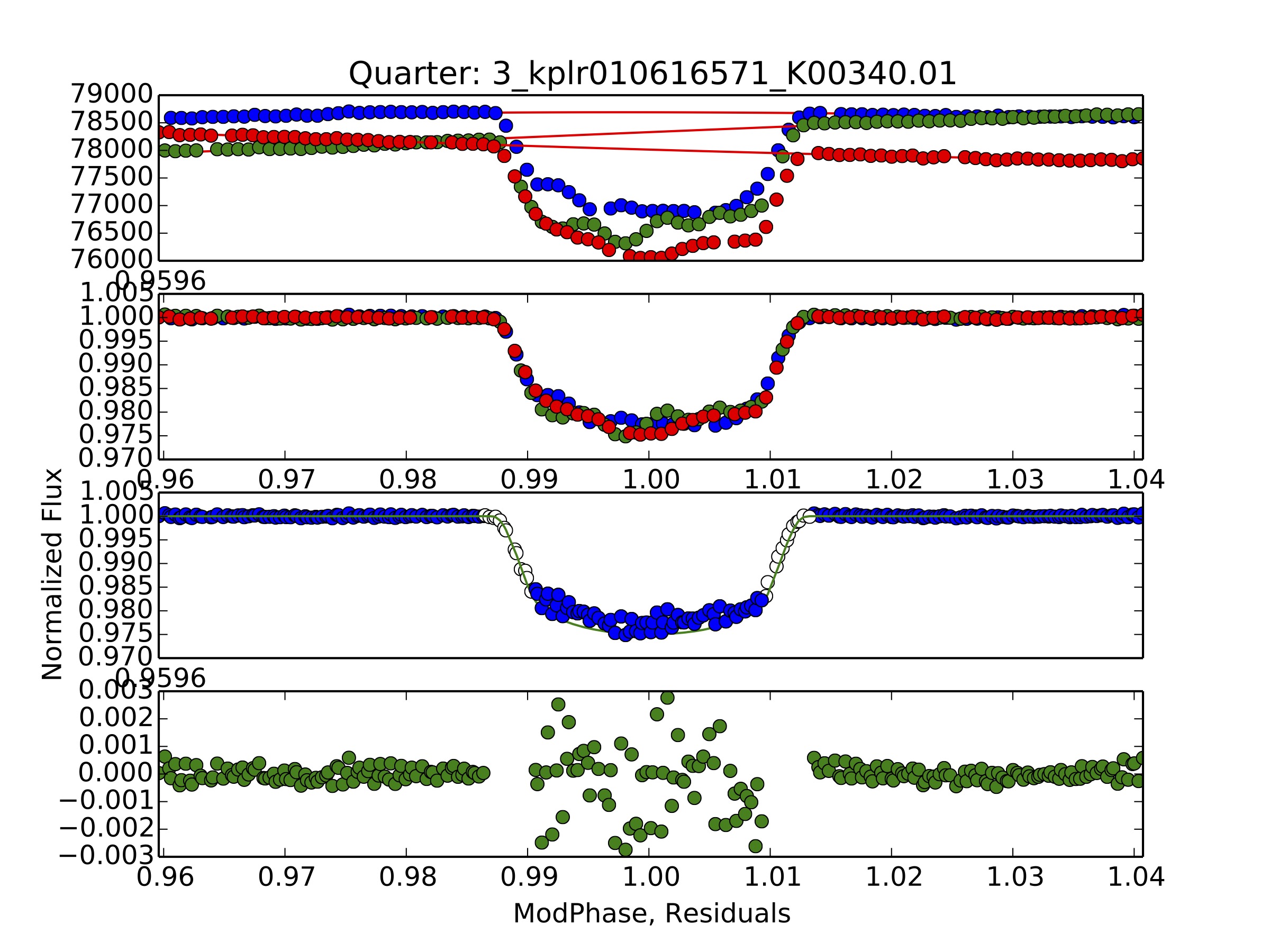
As visible manifestations of strong magnetic fields, starspots provide an oppor- tunity for us to explore small-scale properties of magnetic fields. With the launch of NASA's Kepler satellite, we now have access to near-continuous, high-precision photometry of thousands of transiting planet host stars that we can use to study starspots. We have written a program that uses long cadence photometry of a sample transiting planet host stars to measure starspot variability caused as the planet traverses in front of starspots on the surface of the star. We analyzed a sample of 249 transiting planet host stars from the Kepler satellite and found 16 whose light curves are strongly a#ected by in-transit starspots. We are using our total sample of 249 planet host stars to investigate correlations between the presence of starspots and global stellar parameters such as e#ective temperature and rotation period. In addition, we are using the known position of the planet to explore the latitude of the starspots on the transiting planet host stars. In our analysis, we find that the presence of starspots correlates with rotation period such that there is a decrease in starspot variability in sampled light curves as rotation period increases. In addition, our data suggest that cool stars less than 5000 K are more likely to have starspot crossing features in their transit light curves than hotter stars greater than 5000 K.